The Haunted Houses She Calls Her Own
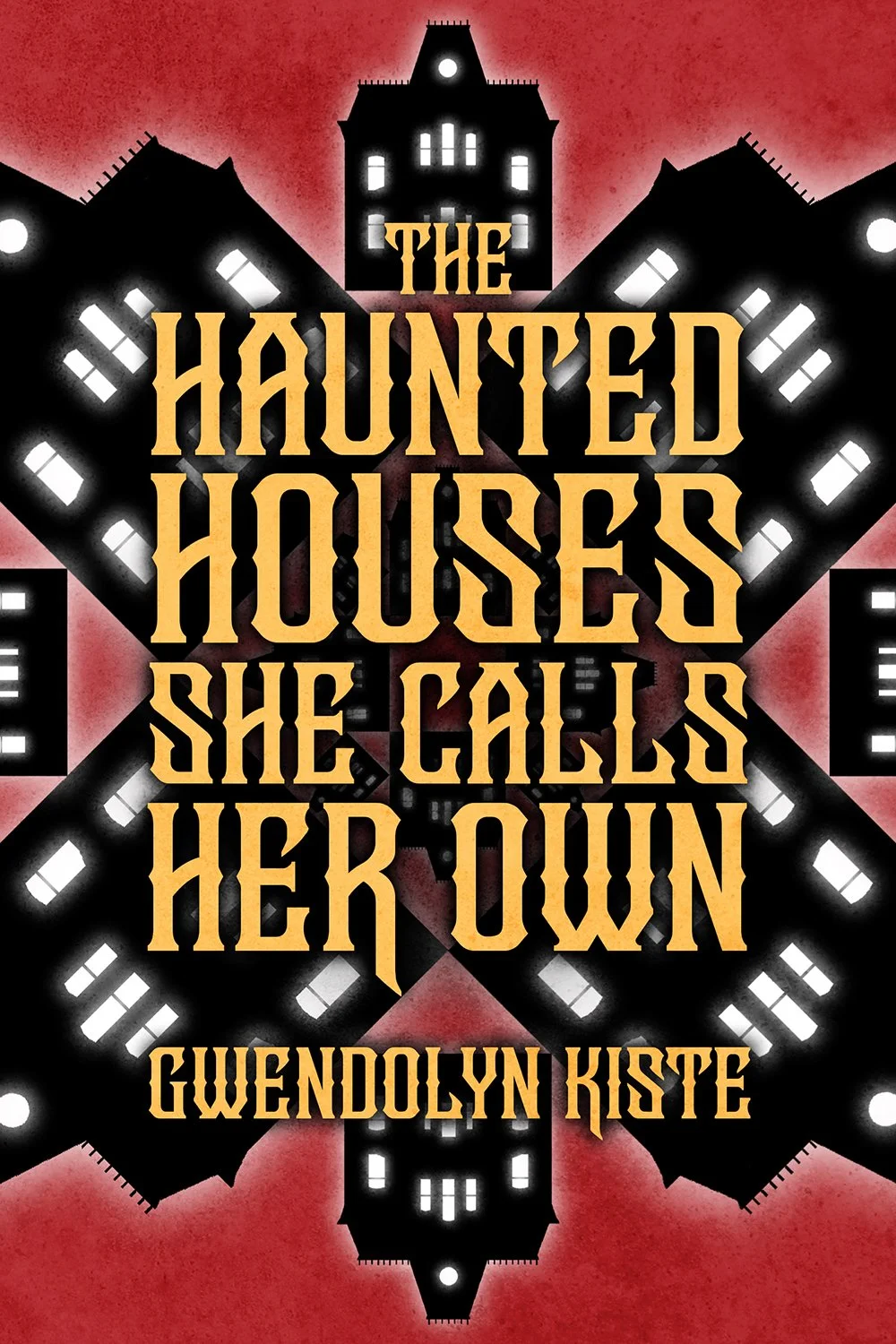
Much like the narrator in “Her Skin Was a Grim Canvas” could not merely wear clothes, there is no such thing as merely reading a Gwendolyn Kiste work. The stories in The Haunted Houses She Calls Her Own have to be savored, lived in, passages - and even whole stories - read again to relive the language or extract more meaning or wallow in the emotion - be it fear, horror, dread, grief, humor - on the dark side, of course.
Kiste’s stories are about mothers, daughters, sisters, friends, lovers and what the world does to these women (sometimes with their intersectional queer experiences), very literally in some stories like the aforementioned “Her Skin Was a Grim Canvas” in which the narrator accuses the rich of wanting “to possess the broken pieces of me” or tongue-in-cheek like the introductory story “A New Mother’s Guide to Raising an Abomination” in which the infant flies, oozes decay, and grows at an astronomical rate - which barely feels like an exaggeration if you’ve ever known a baby.
In an overall strong collection, besides those mentioned, highlights for me are the “good for her” plot in “The Sea Witch of the World’s Fair”, whose main character is “a sea creature pretending to be a human pretending to be a sea creature,” and the cursed films and the lives of those in “The Eleven Films of Oona Cashford,” but I am sure to revisit all the stories.
NetGalley and Raw Dog Screaming Press provided an advance copy for my honest review.